
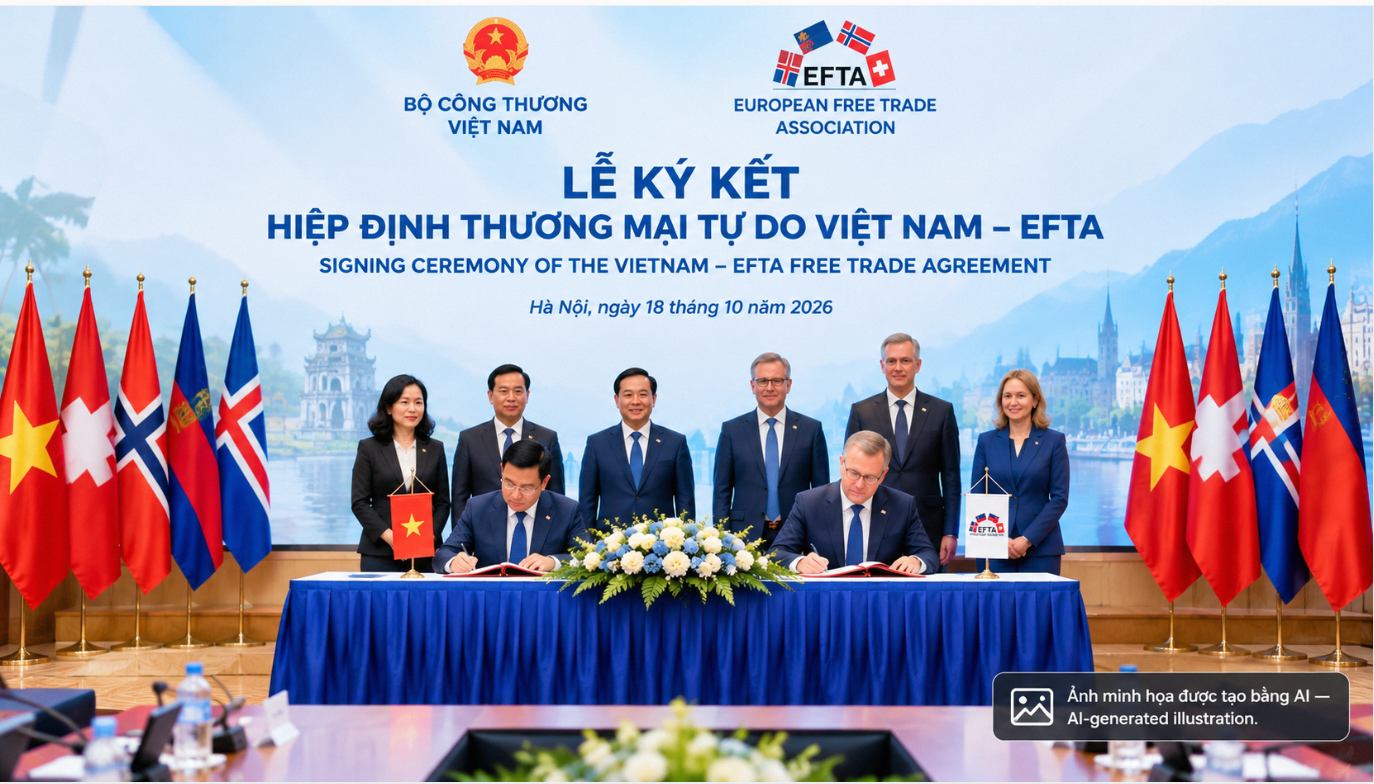
Vietnam Signs EFTA Trade Agreement: New Opportunities for Exporters
Published: October 19, 2026
Vietnam and the European Free Trade Association (EFTA) signed the Vietnam–EFTA Free Trade Agreement (VEFTA) in Hanoi on October 18, 2026. EFTA comprises four member states: Switzerland, Norway, Iceland, and Liechtenstein.
The agreement is an important development for Vietnam’s international trade, particularly for manufacturers, suppliers, and businesses exploring opportunities to expand into overseas markets.
1. Opportunities to Expand Export Markets
The agreement provides a framework for Vietnamese businesses to explore opportunities in EFTA markets. Manufacturers of industrial goods, consumer products, and processed products can assess the competitiveness of their offerings in these markets.
Actual export opportunities will depend on the product category, importer demand, product standards, and the specific commitments under the agreement.
2. Building International Business Partnerships
Vietnamese businesses can also explore relationships with international importers, distributors, and manufacturing partners.
To improve their readiness, manufacturers should prepare professional factory profiles, product catalogs, technical specifications, quality certifications, and clear information about production capacity.
3. Key Requirements for Businesses
A signed trade agreement does not automatically guarantee new orders or immediate tariff benefits.
Businesses should:
- Check tariff schedules and commitments for each product code.
- Review rules of origin to determine eligibility for preferential treatment.
- Meet relevant technical, quality, and traceability requirements.
- Evaluate logistics costs, delivery capacity, and competitiveness.
- Understand importer requirements before investing in additional production capacity.
4. How Manufacturers Can Prepare
Businesses should begin by identifying products with potential in EFTA markets. They should then review their production capabilities, legal documentation, and existing certifications.
Developing a professional factory profile and proactively engaging international buyers can help manufacturers prepare for emerging market opportunities.
Important Note on Entry into Force
Signing an agreement does not necessarily mean it is already in force. Businesses should monitor official announcements regarding its effective date and implementation rules before making decisions based on preferential tariffs.
Conclusion
The Vietnam–EFTA Free Trade Agreement creates new prospects for trade cooperation between Vietnam and the four EFTA member states. For manufacturers and exporters, preparation, product compliance, and a targeted approach to international customers will be important in pursuing these opportunities.
Sources:
- Vietnam Ministry of Industry and Trade: https://moit.gov.vn/en/news/signing-of-the-free-trade-agreement-between-viet-nam-and-the-member-states-of-the-european-free-trade-association-efta-.html
- European Free Trade Association: https://www.efta.int/media-resources/news/efta-and-viet-nam-sign-free-trade-agreement
VietnamFactoryData.com – Connecting global buyers with Vietnam’s manufacturing capabilities.