
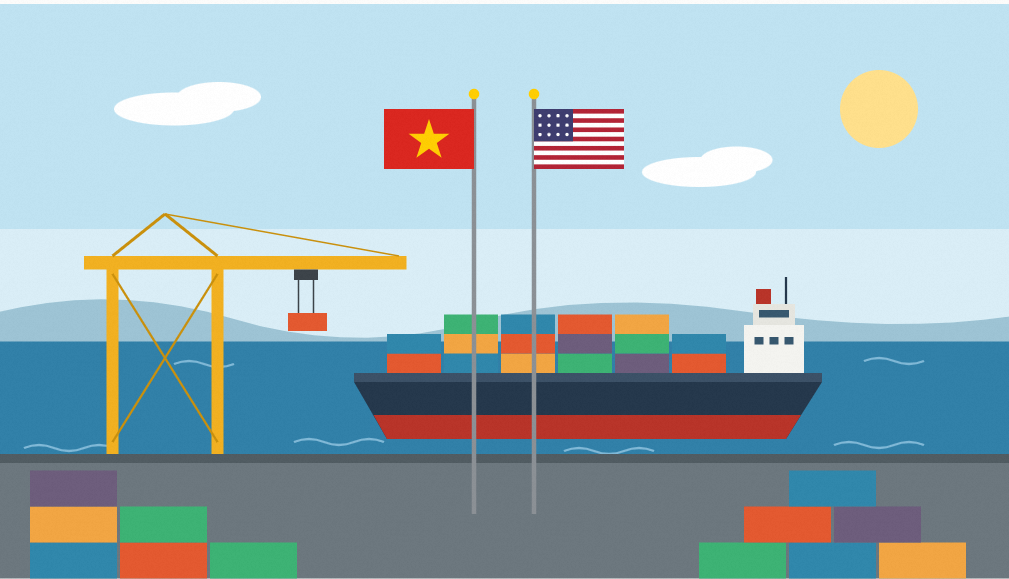
Vietnam’s Trade Surplus with the US Grows as Trade Negotiations Near Completion
Vietnam’s trade relationship with the United States remains a major focus in 2026. Bilateral trade continues to grow as the two countries move closer to completing negotiations on a reciprocal trade agreement. For Vietnamese exporters, developments in tariffs, rules of origin, and trade compliance remain important considerations.
1. Vietnam’s Trade Surplus with the US Continues to Expand
According to Vietnam’s Government News portal, citing the National Statistics Office, Vietnam exported approximately US$140 billion worth of goods to the United States in the first nine months of 2026. The country’s trade surplus with the US reached US$122.62 billion, up 23.8% year on year.
A Reuters report published on October 14, 2026, citing US trade data, said Vietnam’s goods trade surplus with the United States had exceeded US$163 billion in January–August 2026. The report also noted that US officials had raised concerns about the size of the imbalance.
These figures come from different reporting periods and statistical sources. They should therefore be interpreted separately rather than compared directly.
2. Vietnam–US Trade Negotiations Near Completion
Vietnamese officials have said that negotiations on a reciprocal trade agreement with the United States have largely been completed, although some technical issues remain.
According to Reuters, Deputy Prime Minister Pham Gia Tuc said Vietnam had submitted the final draft to the US side. However, US officials have taken a more cautious position, indicating that several concerns still need to be addressed.
Key issues include trade imbalances, rules of origin, the potential transshipment of goods from third countries to avoid tariffs, intellectual property protection, and other trade compliance matters.
The negotiations should not be treated as a finalized or implemented agreement until both sides officially confirm the outcome and publish the applicable terms. Businesses should continue to follow existing regulations and tariff measures unless official guidance states otherwise.
3. What Does This Mean for Vietnamese Exporters?
The outcome of the negotiations could affect Vietnamese companies exporting to the US, particularly those operating in supply chains involving multiple countries or imported components.
Tariffs and Market Access
Changes to US tariff policy could affect landed costs, pricing strategies, and the competitiveness of Vietnamese products. Exporters should not assume that a potential agreement will automatically reduce tariffs for every product.
Companies should check the applicable tariff treatment for each product, taking into account its classification, origin, and any relevant trade measures.
Rules of Origin and Supply Chain Transparency
Rules of origin help determine whether goods qualify for preferential tariff treatment or are subject to specific trade measures.
Businesses should maintain clear records of raw materials, suppliers, manufacturing processes, production locations, and supporting origin documents. Products shipped from Vietnam are not necessarily considered Vietnamese-origin goods solely because they are exported from Vietnam.
Companies using imported components or participating in cross-border manufacturing should review their documentation and supply chain records carefully.
Trade Compliance and Documentation
Exporters should ensure that commercial invoices, packing lists, certificates of origin, production records, and other supporting documents are accurate and consistent.
Depending on the product and applicable regulations, companies may also need to review requirements related to product standards, intellectual property, labor practices, and other compliance obligations.
Not every industry or product is subject to the same investigations or tariff measures. Businesses should assess the rules that specifically apply to their goods rather than relying on general market commentary.
4. Industries That Should Monitor Developments Closely
Vietnamese manufacturers and exporters serving the US market should pay particular attention to changes that may affect their products and supply chains.
- Machinery and industrial manufacturing: Maintain production records, supplier documentation, and evidence of manufacturing processes.
- Textiles and footwear: Review material sourcing, production stages, and origin documentation.
- Furniture and wood products: Ensure that material origins and manufacturing records are traceable.
- Electronics and components: Keep clear records of imported parts, assembly processes, and product classification.
- Packaging and supporting industries: Confirm product specifications, customer requirements, and the origin of relevant materials.
These are practical areas for review, not a claim that every product in these industries faces the same US trade restrictions.
5. Practical Steps for Export Businesses
While negotiations continue, Vietnamese exporters can take several steps to reduce uncertainty and prepare for potential policy changes.
- Review product classification and tariff exposure. Identify the relevant tariff codes and verify the measures currently applicable to each product exported to the United States.
- Strengthen origin documentation. Keep supplier declarations, material records, production data, and supporting documents organized and consistent.
- Evaluate supply chain risks. Understand where raw materials and components originate, where manufacturing takes place, and whether the company can substantiate its origin claims.
- Communicate with US buyers. Discuss documentation expectations, contract terms, tariff responsibilities, and how changes in trade policy may affect pricing and delivery.
- Diversify markets where practical. Maintaining access to multiple markets can help reduce dependence on a single destination and improve resilience when trade policies change.
6. Outlook: Opportunities Alongside Greater Compliance Requirements
The near-completion of Vietnam–US trade negotiations is an important development for bilateral commerce. However, the final impact on Vietnamese exporters will depend on the agreement’s confirmed terms, implementation schedule, product coverage, and related regulatory measures.
For manufacturers and export-oriented businesses, the priority is to prepare for different outcomes rather than assume that negotiations will automatically create more favorable conditions.
Companies that understand their tariff exposure, maintain transparent supply chains, and prepare reliable documentation will be better positioned to respond to changes in the US trade environment.
For Vietnamese exporters, market access remains important, but verifiable origin, transparent manufacturing processes, and consistent trade compliance are increasingly essential to sustaining long-term business relationships.
Sources
- Vietnam Government News — “Viet Nam, US basically complete negotiations on reciprocal trade agreement,” October 8, 2026.
https://en.baochinhphu.vn/viet-nam-us-basically-complete-negotiations-on-reciprocal-trade-agreement-111261008090126213.htm - Reuters — “Vietnam says trade negotiations with US almost completed,” October 14, 2026.
https://www.reuters.com/world/asia-pacific/vietnam-says-trade-negotiations-with-us-almost-completed-2026-10-14/