
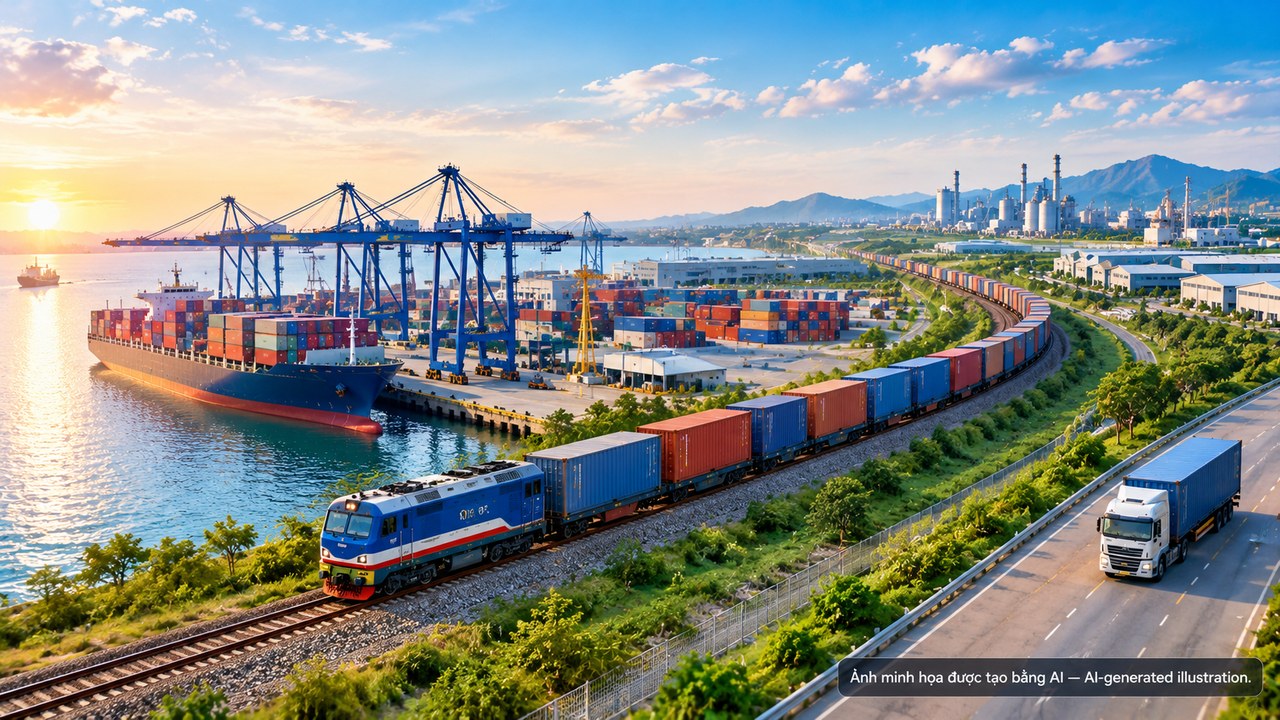
Hateco and Maersk Explore Railway Freight Terminals in Vietnam: What Exporters Should Know
Published: October 25, 2026
On October 20, 2026, Vietnam’s Hateco Group and APM Terminals, a member of A.P. Moller – Maersk, signed a memorandum of understanding (MoU) during the Vietnam–Denmark Business Forum in Copenhagen. The agreement covers cooperation to study the investment, development, and operation of a railway freight terminal network in Vietnam.
According to Vietnam’s Government News Portal, the initiative aims to strengthen multimodal logistics connections between railways, seaports, and regional transport networks.
For manufacturers, suppliers, exporters, and importers, this is worth monitoring because logistics costs and delivery reliability directly affect supply-chain competitiveness.
However, the MoU marks an exploratory stage of cooperation. It does not establish that the proposed terminals have been approved for construction, that specific routes are confirmed, or that services will begin on a defined date.
1. What Does the Hateco–APM Terminals Agreement Cover?
The memorandum signed on October 20 outlines cooperation to study investment, development, and operations for a railway freight terminal network in Vietnam.
The stated direction is to connect rail infrastructure with seaports and regional transport corridors, potentially improving freight movement and international trade connectivity.
For northern Vietnam, stronger links between industrial zones and seaports around Hai Phong could be relevant to manufacturing supply chains. Nevertheless, companies should not assume that a particular route has already been finalized or will be available within a specific timeframe.
The key confirmed development is the agreement to study cooperation, not the completion of a ready-to-use railway freight network.
2. Why Could Rail Freight Matter to Manufacturers and Exporters?
Rail freight can complement road and maritime transport on suitable routes.
Connecting factories with seaports
If developed and integrated effectively, freight terminals could provide additional options for moving containers between industrial zones, logistics hubs, and seaports. Actual performance would depend on terminal locations, road access, train schedules, and cargo-handling capacity.
Diversifying transport options
Having more suitable transport choices may help businesses plan deliveries and manage logistics risks. However, rail is not automatically cheaper or faster than road transport. Total performance depends on the entire journey, including first- and last-mile trucking, handling, storage, and waiting time.
Improving supply-chain planning
When multiple transport options are available, businesses can compare total costs, delivery times, and reliability before selecting the most appropriate route for each shipment.
These are potential benefits of multimodal logistics, not confirmed outcomes of the newly signed MoU.
3. Understanding the Investment Figures
Vietnam’s Government News Portal reported that the preliminary total investment for projects the two sides plan to pursue could reach approximately US$3.5 billion.
Reuters subsequently clarified that the proposed US$2.5–3.5 billion range relates to the companies’ broader planned investments in Vietnam, rather than the cost of the railway freight terminal initiative alone.
The distinction matters. The MoU should not be described as a US$3.5 billion railway project that has officially entered construction.
As of the information cited for this article, public reporting had not established a complete list of terminal locations, a dedicated capital budget for the railway network, construction dates, completion milestones, or a service-launch schedule.
Businesses should wait for these details before making long-term logistics commitments based on the proposal.
4. What Should Manufacturers and Exporters Do Now?
While further details are pending, companies can take four practical steps.
First, review current logistics costs.
Calculate the total cost of moving goods from the factory to the port or final delivery point. Include transport, handling, storage, additional charges, and the cost of delivery delays. This provides a baseline for evaluating future alternatives.
Second, identify freight flows that could suit rail.
Businesses moving substantial cargo volumes on relatively stable schedules, particularly between industrial zones and seaports, may have good reasons to monitor future freight-terminal developments.
Suitability will still depend on factory location, cargo type, shipment volume, delivery requirements, and transport conditions.
Third, improve shipment data.
Track container volumes, transit times, on-time delivery performance, logistics costs per unit, and the causes of additional expenses. These records will help companies compare alternative transport options objectively if new services become available.
Fourth, monitor official project updates.
Look for confirmed locations, infrastructure connections, schedules, operators, tariffs, and service conditions before changing logistics contracts or making delivery commitments to customers.
5. Potential Opportunities for Vietnamese Suppliers
If railway freight terminals are developed in the future, a wider logistics ecosystem could create opportunities for several business groups, including:
- Freight transport and forwarding providers.
- Warehousing, packaging, and cargo-handling businesses.
- Equipment, materials, and maintenance suppliers.
- Technology providers for transport management, warehousing, and container tracking.
- Manufacturers that need to move imported inputs or export finished products.
These are potential supplier categories to monitor, not companies already selected for the proposed project.
Businesses interested in such opportunities should prepare clear capability profiles, service information, operating coverage, safety standards, and evidence of their ability to meet partner requirements.
Conclusion
The October 20 agreement between Hateco and APM Terminals opens a path to studying railway freight terminal development in Vietnam, with the broader aim of improving multimodal connectivity and supporting international trade.
For manufacturers, suppliers, exporters, and importers, the announcement is relevant but does not yet justify assuming that logistics costs will fall or that a specific railway service will begin soon.
The practical priority is to understand current logistics costs, identify freight routes that might benefit from future alternatives, and monitor official updates as the proposal develops.
Sources:
- Vietnam Government News Portal, “Hateco and Maersk Explore Railway Freight Terminal Development in Northern Vietnam,” October 20, 2026.
- Vietnam Government News Portal, English-language report on the railway freight terminal MoU, October 20, 2026.
- Reuters, report on the non-binding MoU between Maersk and Hateco concerning railway freight terminals in Vietnam, October 20, 2026.
VietnamFactoryData.com — Connecting global buyers with Vietnam’s manufacturing capabilities.